Practice

Architecture rarely begins with invention. Most projects begin with something that already exists — a familiar construction detail, a forgotten drawing, an ordinary material, a building type that has become invisible through repetition.

Rather than asking what we should make, we usually begin with another question: what have we stopped seeing?

Swap Office working drawing

An ongoing map of recurring questions across projects.

Not a Portfolio

This drawing is not a collection of finished work. It is a working map. Buildings, exhibitions, competitions, publications, furniture, installations, and research appear together because they emerge from the same investigation. Projects may change. The questions rarely do.

Four Ways of Seeing

Manipulating the Ordinary 18 Projects Reframing Memory 10 Projects Rewriting Types 17 Projects Redirecting Matter 7 Projects

Reading Before Making

Every project begins long before design.
We collect.
We redraw.
We compare.
We classify.
We build archives.
Sometimes the project is already hidden inside those archives.

Studio work in progress at Swap Office

Process

  1. Observe
  2. Collect
  3. Redraw
  4. Question
  5. Test
  6. Build
  7. Repeat
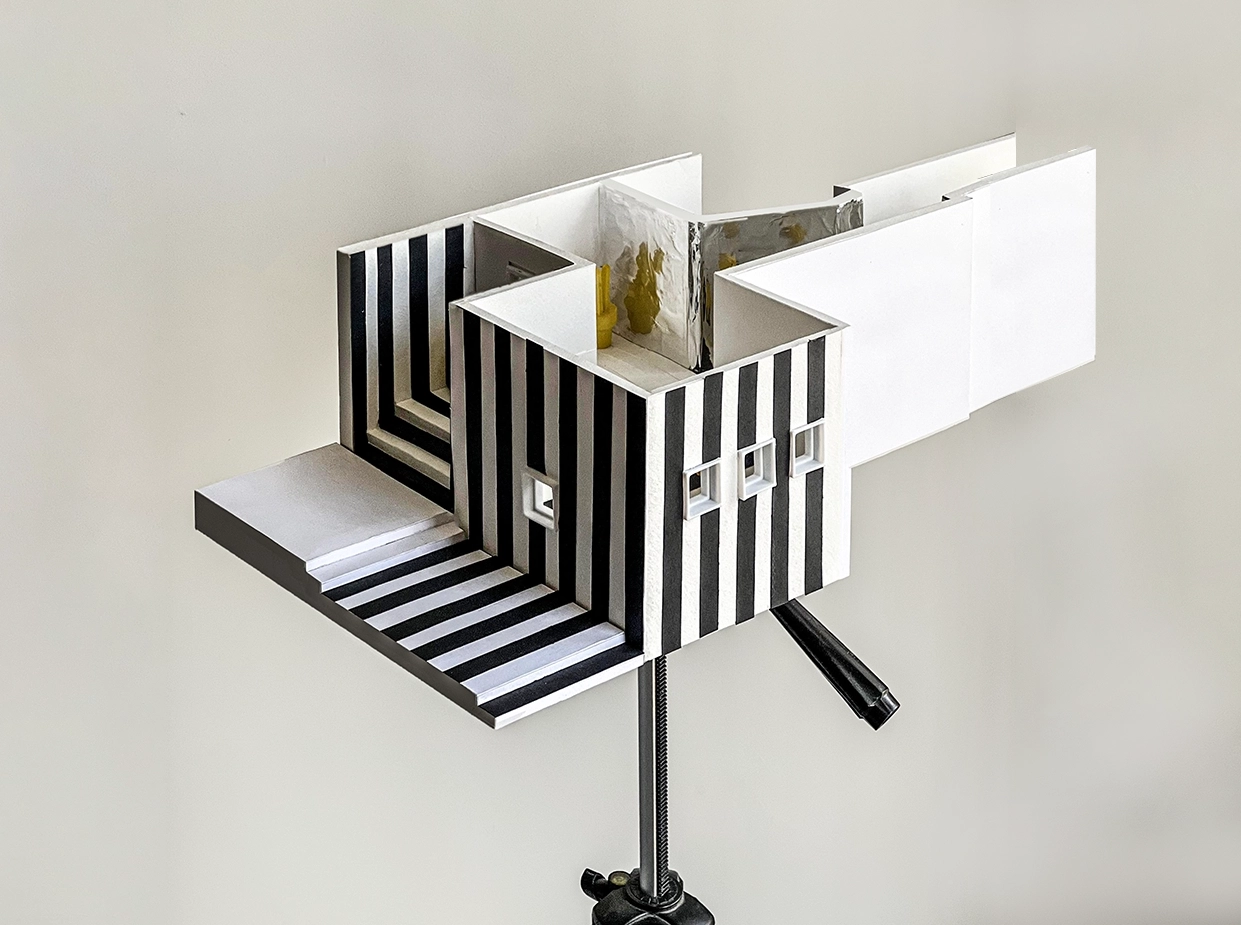
Rah-Rah Apartment model

The ordinary is rarely ordinary. It only appears that way because we have looked at it too many times. Architecture becomes interesting when something familiar is seen differently — not through novelty, but through attention.

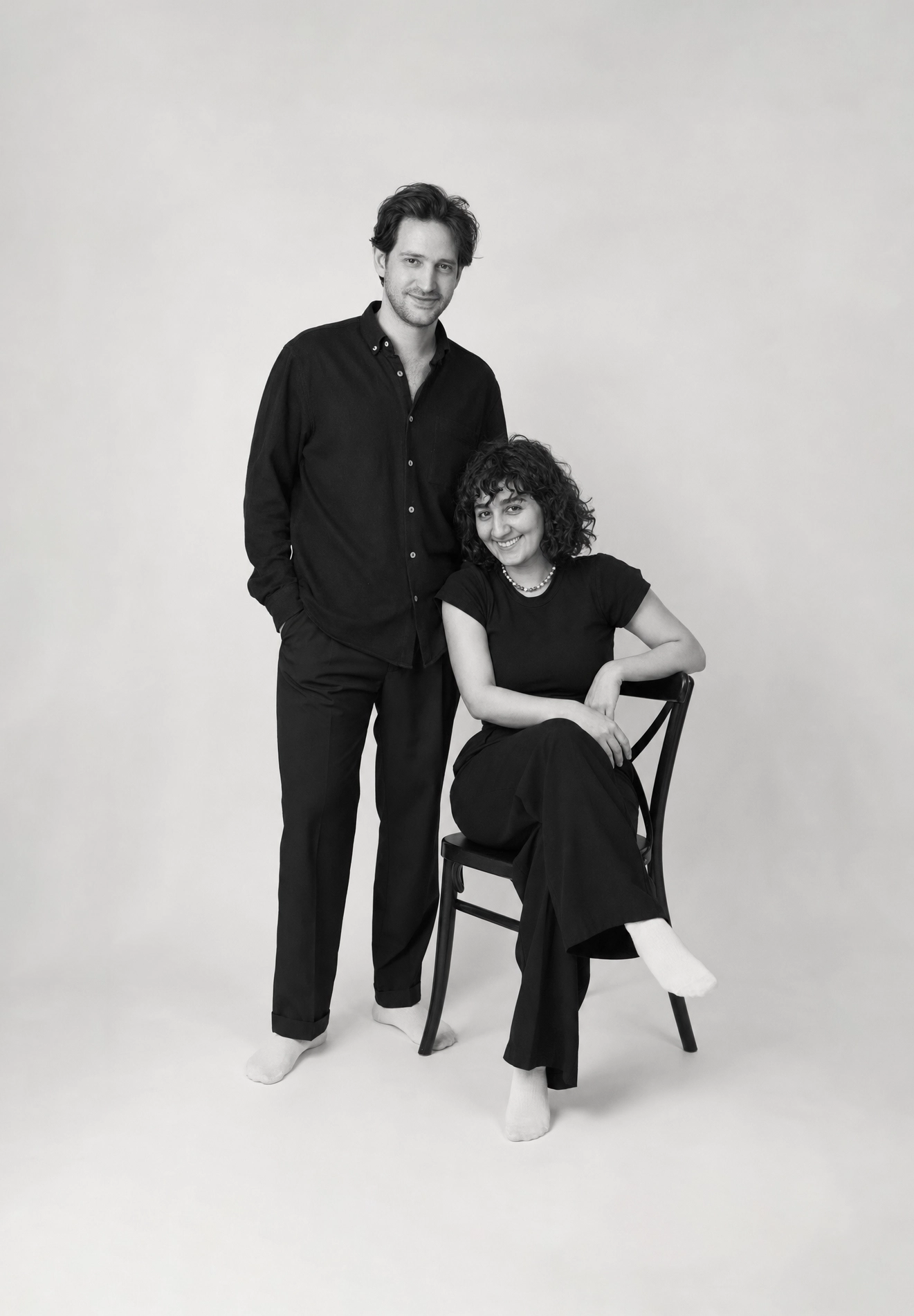
Farnaz Manzour and Mehdi Taheri

Swap Office is an architecture and research practice based in Tehran, led by Farnaz Manzour and Mehdi Taheri. Buildings, exhibitions, publications, competitions, and speculative projects are treated as different scales of the same investigation. Some projects become buildings. Some become books. Some remain questions.

Timeline

2019

Swap Office founded in Tehran, after graduating from the CAAI School of Architecture. Questioning how architecture is consumed.

2021

Working with existing contexts instead of replacing them — the beginning of a recognizable method.

2023–Today

Research and design become inseparable. Reading, translation, and publishing extend the practice past building.

Recognition
First place — «Port of Cultures», Mariupol, Ukraine (2020)
Future category, 2A — Europe Architecture Awards (2020)
First place — Memorial for Railway Martyrs, Tehran (2021)
Second place — Arak C.E.O. Headquarters (2021)
Honorable mention — Kazanka River Development, Russia (2021)
Fifth place — «From Garden-City to Garden of the City», Isfahan (2021)
Honorable mention — Institute for Sustainable Development, Ahvaz (2021)

We don't look for extraordinary architecture.
We look until ordinary architecture becomes extraordinary.