Radical Margins
Roland Barthes, in his theory of narrative, stresses the importance of complementary and completing events alongside constructive ones—events that play no direct role in the main story but deepen and layer our understanding. History is a narrative representation of the past, and architectural history is no exception. So the question arises: who has filled the historical margins as we know them? Which marginalised narratives, operating silently yet effectively in the shadow of the official story, have shaped the built environment?
In ELSE’s second issue, we set out to examine architecture’s completing events—the layers that make the story whole. We turned to architects who, rather than occupying prominent positions, exist in the margins; architects who, despite working in the shadow of the mainstream, left profound marks.
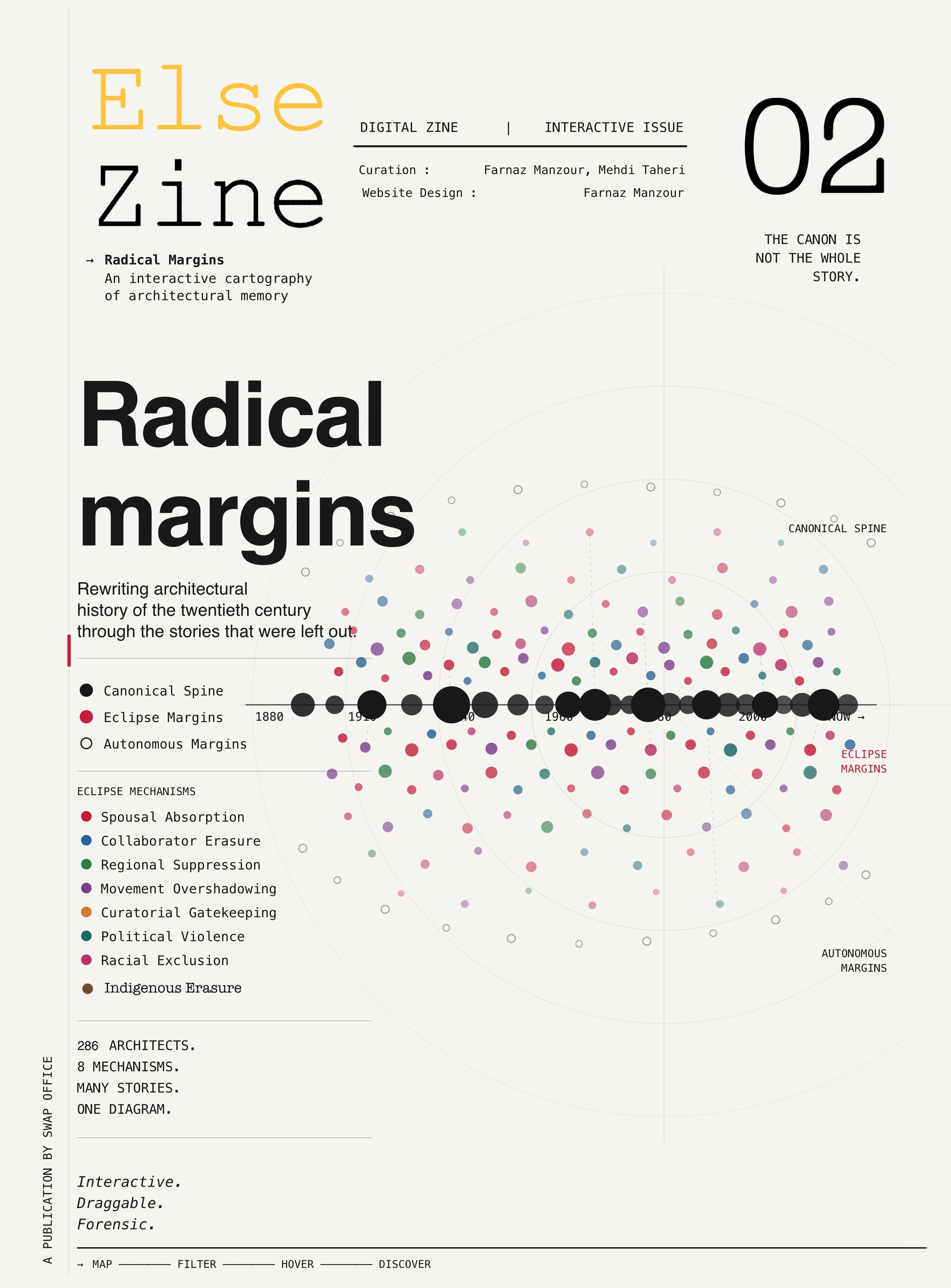
The map organises architects into three categories:
· Canonical Spine: the familiar names that form the official narrative.
· Eclipse Margins: figures erased or absorbed by a dominant architect or systemic force.
· Autonomous Margins: parallel worlds built outside the canon’s gravity.
Eclipse Margins are classified by eight mechanisms of erasure:
Spousal · Collaborator · Regional Suppression · Movement‑Leader · Curatorial Gatekeeping · Political Violence · Racial Exclusion · Colonial/Indigenous Erasure.
Curated by Farnaz Manzour & Mehdi Taheri / Swap Office. Interactive design by Farnaz Manzour.
رولان بارت در نظریهٔ روایت، بر اهمیت رخدادهای مکمل و کاملکننده در کنار رخدادهای سازنده تأکید میکند؛ رخدادهایی که نقشی مستقیم در روایت اصلی ندارند، اما درک ما را از آن عمیقتر و چندلایهتر میسازند. تاریخ نیز بازنمایی روایی گذشته است – و تاریخ معماری از این قاعده مستثنی نیست. پس این پرسش مطرح میشود: حاشیههای تاریخیای که میشناسیم را چه کسانی پر کردهاند؟ کدام روایتهای به حاشیه راندهشده، در سایهٔ روایت رسمی اما بیصدا و مؤثر، محیط ساختهشده را شکل دادهاند؟
در دومین شمارهٔ ELSE، تلاش کردیم تا با بررسی رخدادهای مکمل در تاریخ معماری، به درکی عمیقتر از لایههای آن برسیم. از این رو سراغ معمارانی رفتهایم که به جای ایستادن در جایگاههای برجسته، در حاشیه قرار گرفتهاند؛ معمارانی که با وجود حضور در سایهٔ جریان اصلی، تأثیراتی شگرف بر جای نهادهاند.
در این نقشه، معماران به سه دسته تقسیم شدهاند:
· کنون ها (Canonical Spine): نامهای آشنایی که روایت رسمی را میسازند.
· حاشیههای در سایه (Eclipse Margins): معمارانی که در سایهٔ یک چهرهٔ اصلی یا یک نیروی سیستماتیک محو شدهاند.
· حاشیههای مستقل (Autonomous Margins): جهانهای موازیای که مستقل از کانون شکل گرفتهاند.
حاشیههای در سایه بر اساس هشت سازوکار طرد دستهبندی شدهاند:
همسران · همکاران · سرکوب منطقهای · رهبری جنبش · انحصار کیوریتوریال · سرکوب سیاسی · طرد نژادی · پاکسازی استعماری/بومی.
کیوریتوری: فرناز منظور و مهدی طاهری / استودیو سوآپ. طراحی سایت: فرناز منظور